

This winter cleaning checklist helps Gulf Coast homeowners prepare for colder days. Winter can bring chilly mornings, rainy days, and more time indoors. Whether you live in Mobile, Alabama, or across the line in Pascagoula or Moss Point, Mississippi, the windows close and the heat kicks on. For that reason, late fall is a useful time for deep cleaning before winter.
At Just the Best Clean, we bring professional cleaning training and attention to detail to the job. This practical winter cleaning checklist separates the decisions only you can make from the cleaning we can help take off your plate.
In this guide
Your winter cleaning checklist: 7 deep-clean jobs
Start the bedding early, then work through the rooms from higher surfaces down to the floor. At each stop, remove loose dirt first, use a cleaner suited to the material, and finish by removing residue and drying. The steps below explain the method; the JTB section shows where our cleaning service can help.
1. Get your entryway ready for wet weather
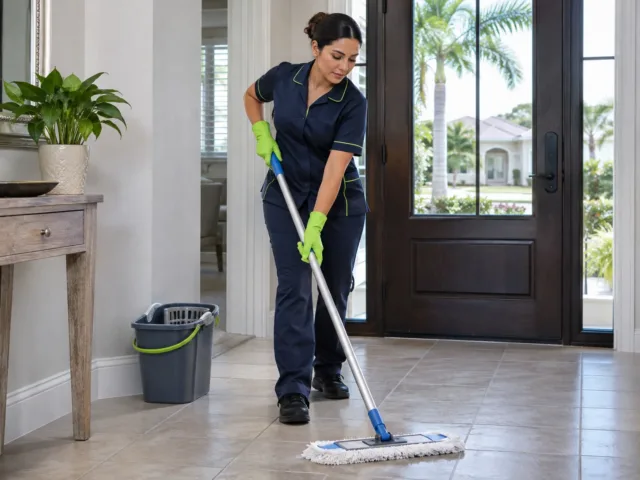
Your part: First, clear out the shoe pile, put away summer gear, and set a good mat outside the door and a washable one inside.
Start with dry debris so grit is removed before you mop.
How to clean it:
- Lift the mats, then vacuum or sweep the entryway, corners, and edges beside the baseboards. Use a soft brush attachment where the finish allows it.
- Check whether the floor is tile, wood, laminate, or another material. Choose a cleaner approved for that floor and follow its dilution directions.
- Clean a small area at a time with a microfiber mop. Keep it only as damp as the floor manufacturer permits, and wipe up any pooled liquid.
- Wipe washable baseboards with a soft cloth, then dry them. Let the floor and freshly cleaned mats dry before putting everything back.
Where JTB helps: After that, we can deep clean the floors and baseboards so you start the season fresh.
Process reference: For finished wood, see Bona’s hardwood floor cleaning guide. Other floor materials need their own care instructions.
2. Kitchen winter cleaning checklist: oven and stovetop
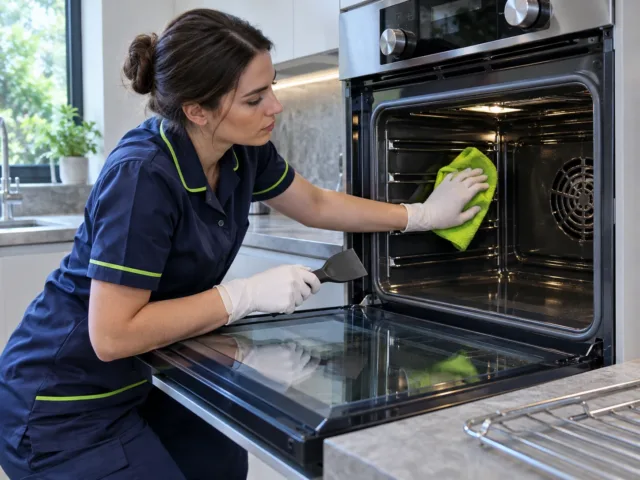
Your part: Cooler weather means more home-cooked meals. Before you start, take out any pans or items stored in or on the oven.
The right oven method depends on the model and its interior finish. Read the manual before choosing a product or cleaning cycle.
How to clean it:
- Turn all controls off and let the oven and stovetop cool. Remove stored pans and any racks the manual says to take out.
- Wipe out loose crumbs. Clean removable racks separately with the method their finish allows; rinse and dry them before reinstalling.
- Use the oven’s approved hand-cleaning, steam-clean, or self-clean process. Follow the specified product amount and waiting time. Avoid saturating controls, heating elements, and the door gasket.
- Wipe away cleaner residue as directed. Finish the cool stovetop, knobs, and front panels with a compatible cloth and cleaner, then dry.
Where JTB helps: For example, built-up grease and old spills can smoke and smell. Our team can deep clean the oven interior, stovetop, knobs, and front panels. Knobs and front panels are some of the most-touched spots in the kitchen. Follow the appliance manufacturer’s cleaning instructions.
Process reference: Whirlpool explains routine oven cleaning and rack care. Some self-cleaning models prohibit commercial oven cleaners.
3. Clear out the fridge and freezer
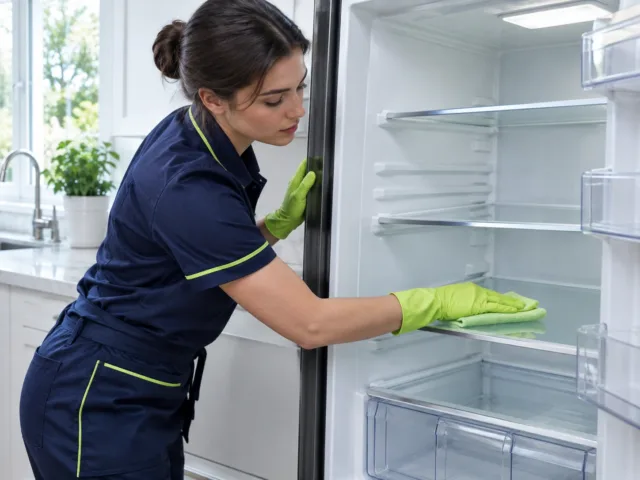
Your part: This one starts with you, because only you know what is worth keeping. Next, check the condition, storage history, and dates of your food, and discard anything unsafe or unwanted. However, many package dates refer to quality, and freezer burn alone does not make food unsafe. FDA food storage guidance explains the difference. Keep perishable food safely chilled while you clean.
Keep perishable food safely chilled while you work, and clean one removable part at a time.
How to clean it:
- Move food to another refrigerator or an insulated cooler with ice packs. Follow food-storage guidance when deciding what to keep.
- Remove only the shelves and drawers your manual allows. Wash suitable parts with mild dish detergent and water, rinse, and dry. Let cold glass warm gradually before washing; avoid sudden temperature changes.
- Wipe the interior with a soft cloth and mild detergent solution. Follow with a clean damp cloth to remove residue, then dry the surfaces.
- Use a soft cloth to clean the folds of the door seals. Refit dry parts and return food promptly. If the freezer needs defrosting, follow its manual; do not chip ice with a sharp tool.
Where JTB helps: Then, once it is empty, we can clean the shelves, drawers, and door seals so the fridge is ready to restock. We follow the appliance’s care requirements and dry the parts before reassembly.
Process reference: The FDA’s refrigerator cleaning guidance covers routine washing, rinsing, and drying. See Samsung’s glass-shelf cleaning caution, and follow your own appliance manual for removable parts and freezer care.
4. Bedroom winter cleaning checklist: bedding and mattresses
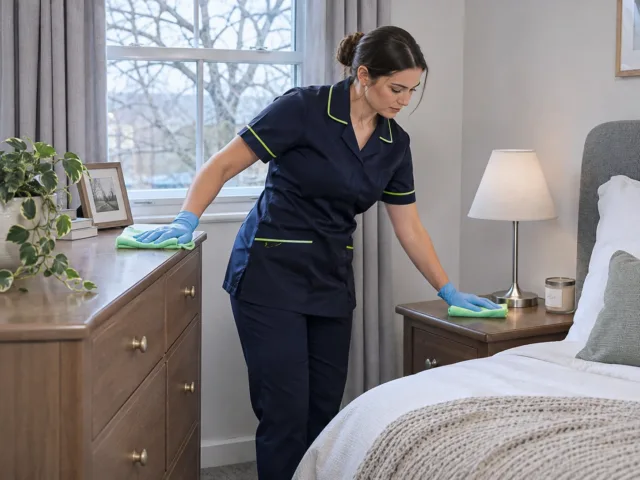
Your part: Wash your heavy blankets before you use them, following their care labels. Comforters and throws can pick up dust and musty smells in storage. Also, wash your mattress protector, and rotate the mattress if the manufacturer recommends it.
Start this job early so the bedding can wash and dry while you clean the room.
How to clean it:
- Strip off sheets, pillowcases, duvet covers, and the mattress protector. Read each care label and separate items that need different wash cycles or professional cleaning. Do not overload the washer with a bulky comforter.
- Use the labeled detergent amount and the wash and drying settings allowed for the fabric. Dry every layer fully before remaking the bed or storing blankets.
- With the bedding removed, use a clean upholstery attachment to vacuum the mattress surface, seams, and accessible sides if its care instructions allow it. Keep a mattress’s built-in cover in place unless the manufacturer specifically permits removal.
- For a spot, test the approved treatment in a hidden area. Apply a small amount to a cloth and blot gently rather than soaking the mattress. Let the area dry completely. Finally, rotate or flip the mattress only when its manufacturer recommends it.
Where JTB helps: At the same time, we can dust and clean the bedroom top to bottom, including furniture, baseboards, and floors.
Process reference: Use ACI’s laundry guide for fabric care and Casper’s mattress cleaning guide for vacuuming and careful spot treatment. Your own mattress instructions take priority.
5. Dust vents, returns, and ceiling fans
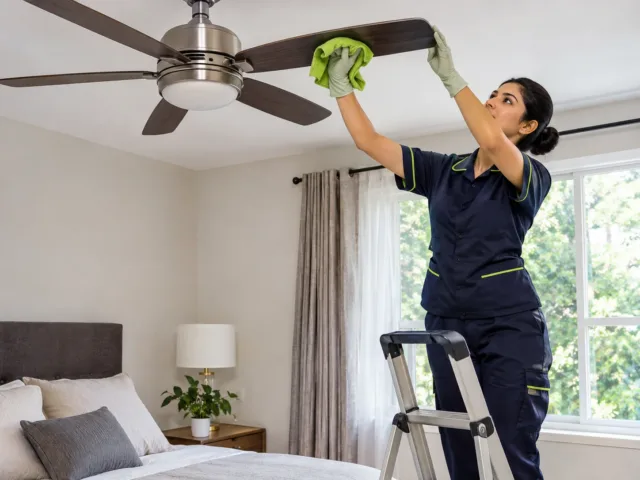
Your part: Check your HVAC filter before the heating season and replace it according to the system and filter manufacturer’s instructions. If your ceiling fan has a reverse switch, the U.S. Department of Energy recommends clockwise rotation on low in winter to help circulate warm air. Turn the fan off before changing direction or cleaning it.
Work on the high surfaces before cleaning the furniture and floor underneath.
How to clean it:
- Turn the HVAC system off before cleaning grille surfaces, and switch the ceiling fan off until its blades stop. Use a stable step stool or a suitable extension tool to reach safely.
- Vacuum visible dust from the vent cover or return grille with a soft brush attachment. Then wipe accessible slats with a lightly damp microfiber cloth and dry them. Keep liquid out of the duct opening and leave vents unobstructed.
- For fan blades, use a microfiber cloth or slip an old pillowcase around one blade and draw it outward to catch the dust. Support the blade gently without bending it.
- If residue remains, use a slightly damp cloth with a mild cleaner allowed for the blade finish. Dry each blade and keep moisture away from the motor and electrical parts. Finally, vacuum fallen dust below.
Where JTB helps: We can remove visible dust from vent covers, return grilles, and ceiling fan blades. This surface cleaning does not include cleaning the inside of ductwork.
Process reference: See Carrier’s vent maintenance advice and Hunter’s fan cleaning steps. This is cleaning the exposed covers and blades, not the inside of ducts or HVAC equipment.
6. Clean windows and window tracks

Your part: Next, move anything sitting on the windowsills or blocking access to the windows.
Clean the tracks and frames first. Otherwise, loose dirt can end up on glass you have just finished.
How to clean it:
- Open an operable window only as its instructions allow. Brush or vacuum loose dirt from the track and sill with a soft tool before adding any moisture.
- Use a cloth lightly dampened with a mild, compatible cleaning solution to lift remaining track buildup. A small soft brush can reach corners. Wipe away residue and dry the track; do not leave standing water.
- Dust the frame, then clean the glass from top to bottom with a soft cloth and a manufacturer-approved glass cleaner or mild soapy solution. Apply product to the cloth when needed to keep it off sensitive frames and hardware.
- Finally, remove the solution with a clean squeegee or lint-free cloth, and dry the edges. Avoid abrasive pads and razor blades. Coated glass may require a different method, so check the window maker’s directions.
Where JTB helps: The days are shorter, so you want every bit of sunlight you can get. We can clean the inside glass and detail the window tracks, where dirt, bugs, and moisture collect.
Process reference: Pella’s window cleaning guide explains preparation and top-to-bottom cleaning. Andersen’s glass care guidance covers soft tools, mild cleaners, and coated glass.
7. Bathroom winter cleaning checklist: grout and moisture
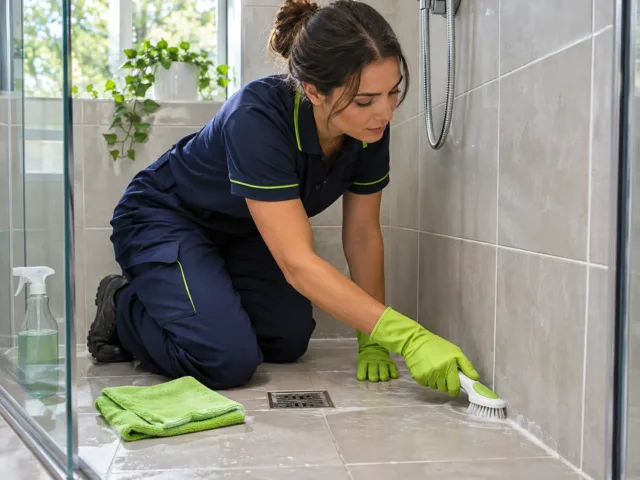
Your part: Finally, run an exhaust fan that vents outdoors during and after showers, and replace a worn shower curtain liner. Fix leaks and let wet surfaces dry. The EPA’s mold and moisture guide explains why cleaning and moisture control need to work together.
Match the cleaner to the tile, grout, tub, and fixture finishes before you start scrubbing.
How to clean it:
- Remove bottles and loose items, and ventilate the room. Choose one product labeled for the surface and the type of buildup; natural stone and specialty finishes may need different care.
- Apply it as directed and allow only the waiting time on that product’s label. Do not let it dry on the surface if the directions say to keep it wet.
- Work along grout lines and corners with a suitable soft nylon brush or non-scratch tool. Use light pressure, then rinse or wipe away the cleaner exactly as directed.
- Dry the grout area, tub edges, and fixtures. Keep using the exhaust fan and address leaks. Cracked grout or failed caulk needs repair; repeated or extensive mold needs more than routine scrubbing.
Where JTB helps: We can scrub the grout, tub, shower, and fixtures to remove routine buildup. Cleaning cannot fix a leak or replace mold remediation. Persistent or extensive mold needs the moisture source addressed and may need specialist help.
Process reference: ACI’s Cleaning 101 bathroom advice covers suitable non-abrasive products. The EPA mold guide explains moisture control, hard-surface cleaning, and when to seek more help.
Safety note: Never mix bleach or disinfectants with vinegar, ammonia, or other cleaners. Follow each product label and provide good ventilation. Read the CDC’s bleach safety guidance.
Get help with your winter cleaning checklist
You make the calls only you can make, and we can handle the scrubbing. If you need house cleaning in Mobile, AL, a cleaning service in Pascagoula, MS, or cleaners serving Moss Point, MS, tell us about your home and what needs attention. JTB also serves Ocean Springs and Mobile County.
Ready to get your home winter-ready? Request a quote from Just the Best Clean or call (251) 333-1923.
Frequently asked questions
What should be on a winter cleaning checklist?
Include entryway floors and baseboards, the oven and stovetop, fridge and freezer organization, bedding and bedroom surfaces, vent covers and ceiling fans, windows and tracks, and bathroom surfaces. Follow product labels and appliance care instructions.
What should I do before the cleaners arrive?
Clear entryway clutter, remove stored items from the oven, sort and safely chill refrigerator food, move items from windowsills, and tell JTB which areas need the most attention. You handle personal decisions and laundry; JTB can discuss the cleaning work.
Does Just the Best Clean offer deep cleaning in Mobile, Pascagoula, and Moss Point?
Yes. Just the Best Clean provides residential deep cleaning in Mobile County, Alabama, and serves Pascagoula and Moss Point, Mississippi. Contact JTB to discuss your home, priorities, and preferred schedule.
Photos are illustrative images created for Just the Best Clean; they do not show actual JTB staff or customer homes.
Winter cleaning checklist sources and care references
- Bona’s hardwood floor cleaning guide
- routine oven cleaning
- rack care
- FDA food storage guidance
- FDA’s refrigerator cleaning guidance
- Samsung’s glass-shelf cleaning caution
- ACI’s laundry guide
- Casper’s mattress cleaning guide
- U.S. Department of Energy recommends clockwise rotation on low in winter
- Carrier’s vent maintenance advice
- Hunter’s fan cleaning steps
- Pella’s window cleaning guide
- Andersen’s glass care guidance
- EPA mold guide
- Cleaning 101 bathroom advice
- CDC’s bleach safety guidance
More time for what matters.
Let our team take care of the cleaning.
Keep reading
October 10, 2026
Do You Really Need All Those Cleaning Bottles?
Read article
September 7, 2026
