PRACTICAL HOME CARE · MOBILE COUNTY, AL
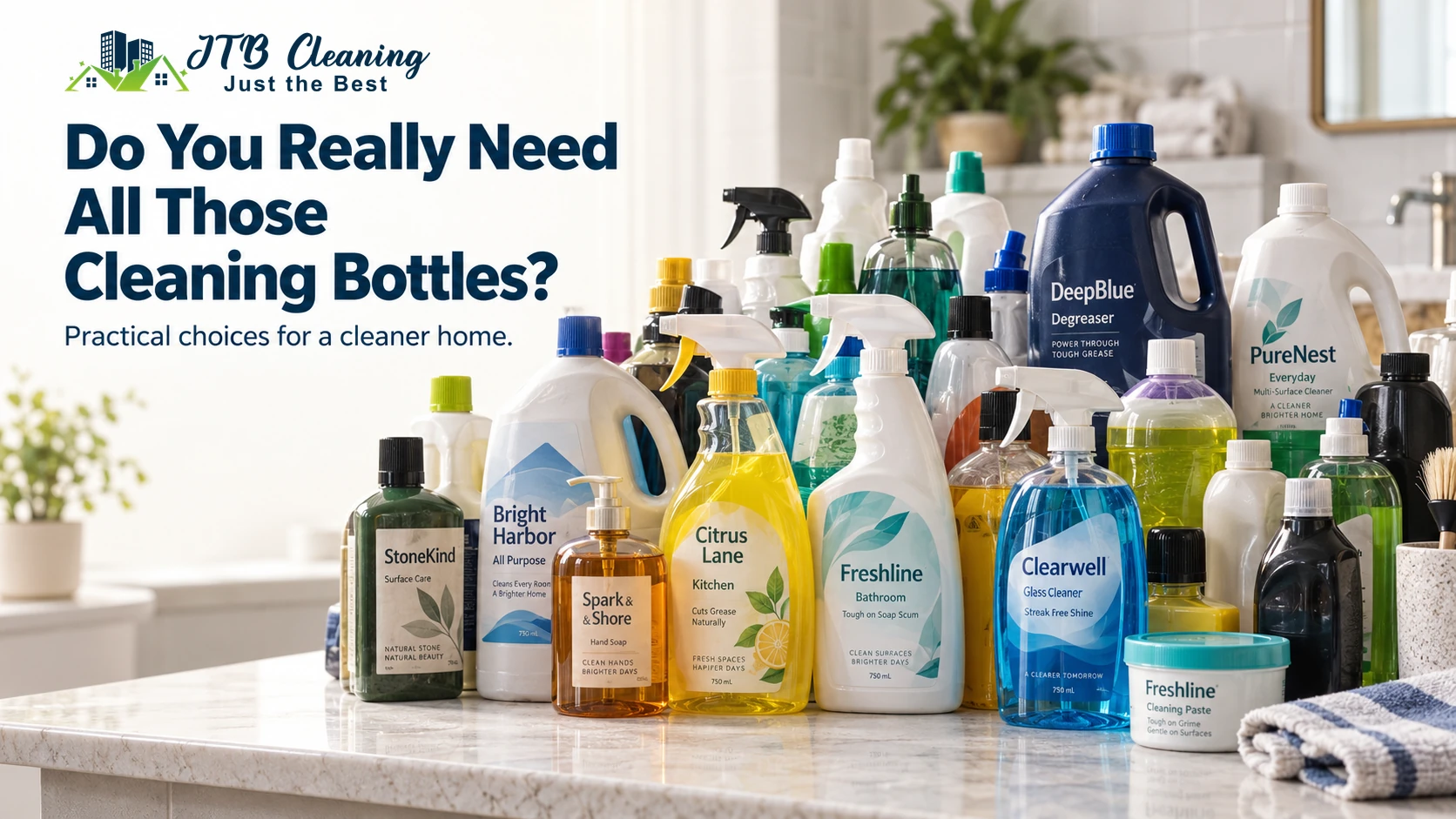
A crowded cabinet can make cleaning harder to figure out. A smaller, well-chosen kit can cover everyday jobs while leaving room for the products your surfaces really need.
One spray for the kitchen. Another for the bathroom. Two bottles for glass, and something you bought for a stain you no longer remember. Before you buy the next cleaner, check what you already have.
These house cleaning tips are for homeowners in Mobile County, AL who want useful cleaning product alternatives without guessing about safety. You do not need a homemade recipe for every job. Start with the surface, the kind of buildup, and the directions on the bottle.
In this guideStart by sorting the bottles you already own
Read the approved surfaces on each label. If two products do the same job on the same surfaces, finish one before replacing it. Keep a separate product when a particular material or problem calls for it.
- Everyday cleaning: a compatible general-purpose cleaner or a mild detergent solution where the surface manufacturer allows it.
- Specific problems: a suitable cleaner for grease, soap scum, mineral deposits, or a toilet bowl.
- Special surfaces: follow the care instructions for natural stone, wood, appliance finishes, and coated shower glass.
- Disinfecting when needed: keep a properly labeled product suitable for the surface and the intended use.
There is no magic number of bottles for every home. The goal is to remove duplication while keeping the right tools for your rooms. Keep chemicals in their original labeled containers when possible. Follow the label and local disposal guidance when getting rid of unwanted products.
Cleaning product alternatives for everyday jobs
Simple options can be useful, but the surface decides what is suitable. Test an unfamiliar method in a small hidden area and follow the material manufacturer’s instructions.
| The job | An option to consider | What to check first |
|---|---|---|
| Light dirt on washable hard surfaces | Mild detergent and water | Use only on suitable surfaces. Wipe away residue and dry as directed. |
| Greasy kitchen surfaces | A compatible kitchen cleaner or degreaser | Confirm the finish is approved. Follow the actual dilution and rinsing directions. |
| Shower soap scum | A soap scum remover labeled for your shower material | Stone and coated glass may need different care. Use a non-scratch tool. |
| Light mineral spots | White vinegar only where the manufacturer permits it | Acids can damage stone and some finishes. Vinegar is not a substitute for a labeled disinfectant. |
| Granite or marble | A neutral stone cleaner or mild dish detergent and water | Follow your stone care guidance. Avoid acidic cleaners and abrasive powders. |
| Rust or stubborn mineral stains | A specialist product approved for that surface | Check application limits. For example, Bar Keepers Friend advises leaving its cleanser on no longer than one minute. |
The Natural Stone Institute’s care guidance explains why acids and abrasives need special attention around stone. For a specialist cleanser, read the exact product label; Bar Keepers Friend’s instructions are an example of why a longer wait is not always better.
A soft cleaning brush, a squeegee, and clean microfiber cloths can also make a modest kit more useful. Choose tools that will not scratch the surface, and use separate cloths for toilets and food-preparation areas.
How to remove soap scum from your shower
If you are working out how to clean a shower, identify the material first. A method suitable for ordinary tile may damage natural stone, a plated fitting, or a protective glass coating.
- Choose one compatible cleaner. Check the label and your shower’s care instructions.
- Give it the time its directions specify. Set a timer. Do not assume every cleaner can sit for 15 or 30 minutes, and do not let it dry if the instructions say otherwise.
- Agitate gently where needed. Use an approved non-scratch brush or pad around corners and grout lines.
- Rinse and dry as directed. Remove residue. If your shower’s care guidance permits it, use a squeegee after showers to reduce water left on the surface.
If the haze remains, the cause could be mineral deposits, product residue, or damage. Buying a stronger bottle without identifying the problem may make matters worse. Persistent cloudiness needs a closer look before another treatment.
For more room-specific guidance, read our shower cleaning tips.
Cleaning vs disinfecting means choosing the right job
Cleaning removes dirt and many germs. Disinfecting uses a suitable product to kill germs that remain. Clean first when the directions require it; visibly dirty surfaces need cleaning before disinfection.
The CDC’s home cleaning guidance says routine cleaning is usually enough. Disinfecting becomes more important when someone is sick or has a weakened immune system. Food-contact surfaces contaminated by raw meat need cleaning and appropriate sanitizing.
Choose an EPA-registered disinfectant for the intended use, or follow applicable bleach guidance. Follow the product’s exact dilution and wet contact time. Do not treat a generic bottle of peroxide or vinegar as interchangeable with a surface disinfectant.
Never mix bleach or disinfectants with other cleaners. Ventilate the room and use the protection the label specifies. Keep children and pets away during use, and follow the label’s rinsing and re-entry directions. Store products out of their reach.
Bathroom moisture matters in Mobile County homes
A bathroom that stays damp needs more than a new cleaning spray. Check ventilation, dry wet surfaces, and fix leaks. Keep using the exhaust fan as needed to clear moisture after showers.
For small mold areas on hard surfaces, the EPA recommends detergent, water, and complete drying, together with fixing the moisture source. Its guidance says areas larger than about 10 square feet, substantial water damage, and contaminated water call for additional assessment or specialist help. Porous materials may need replacement.
A regular cleaning visit cannot fix a leak or replace mold remediation. Address the cause so the same damp patch does not keep returning.
House cleaning in Mobile, AL when you want your Saturday back
A simpler routine can help with everyday maintenance. A thorough clean still takes time, careful work around different surfaces, and attention to places that are easy to overlook.
JTB Cleaning offers house cleaning across Mobile County, AL, with residential and commercial service also available in Pascagoula, Moss Point, and Ocean Springs. Tell us about your home, its condition, and the areas that need attention.
If you need deep cleaning in Mobile, AL, we can discuss the work and provide a quote for your space. You can send a photo of a problem area to help explain what you are seeing.
Request a Quote →(251) 333-1923Frequently asked questions
Can I use dish soap instead of every cleaner?
Mild detergent can handle some everyday cleaning, but material care instructions still matter. Grease, mineral buildup, toilet bowls, and specialty surfaces may need a different product.
Does vinegar disinfect my home?
Do not rely on ordinary white vinegar for surface disinfection. Use a product labeled for disinfecting the surface and follow its directions.
What is the best way to clean a shower?
Start with the shower material, choose a compatible product, follow its application time, use a suitable non-scratch tool, and rinse or dry as directed. Avoid mixing products or assuming stronger is better.
Do you offer residential cleaning in Mobile, AL?
Yes. JTB provides residential cleaning in Mobile, AL and serves Mobile County. See our residential cleaning services and tell us what your home needs.
How do I request cleaning services in Mobile County, AL?
Request a quote from JTB or call (251) 333-1923. Share your location, the size and condition of the space, and your preferred schedule. The quote depends on the work.