The Ultimate Guide: How to Clean Baseboards the Right Way
Baseboards are one of the most overlooked parts of a clean home — but they make a huge difference in how fresh and polished a room feels. At Just The Best Clean, we’ve perfected the proper way to clean baseboards so that your home not only looks great but stays healthier too.
In this guide, we’ll walk you through:
-
Why You Should Always Include Baseboards in Your Cleaning Routine
- Common Mistakes to Avoid
- How Often Should You Clean Baseboards?
- “Pro Level” Tips from Just The Best Clean
- Why DIY Baseboard Cleaning Sometimes Falls Short
- When It’s Time to Call the Professionals
- Final Thoughts
- Frequently Asked Questions
Let’s get into it.
Why You Should Always Include Baseboards in Your Cleaning Routine
You might not notice baseboards until they’re really dirty — but your guests do.
Baseboards serve both a functional and aesthetic purpose:
-
They protect walls from scuffs and impacts
-
They create a visual boundary between floor and wall
-
They catch dust, pet hair, crumbs, and other debris
Over time, baseboards can collect layers of grime that contribute to an overall “unclean” feel in a room. Even if you vacuum and mop regularly, baseboards often get missed — and that’s where dirt settles and builds up.
Cleaning baseboards isn’t just about looks:
Removing dust and debris helps improve indoor air quality and reduces allergens circulating in your home.
What Causes Baseboards to Get So Dirty?
Baseboards collect dirt for two main reasons:
1. Airflow and Dust Circulation
Air moves along walls and carries dust with it. As airflow drops near the floor, dust settles on baseboards first. Over time, this creates a noticeable “line” of buildup that’s tougher to remove.
2. Foot Traffic and Contact
Kids kicking walls with their shoes. Pets brushing up against them. Vacuum cleaners bumping against them. All of these activities transfer dirt, oils, and smudges onto baseboards.
Without regular cleaning, seasonal allergens and airborne debris cling to this surface and can affect your home’s overall cleanliness.
Supplies You’ll Need for Proper Baseboard Cleaning
Before you start, gather the right tools. This makes the job faster and more effective.
Essential Tools
-
Soft scrub brush or old toothbrush – for grooves and corners
-
Bucket or spray bottles – for water and cleaning solutions
-
Vacuum with brush attachment – to remove loose debris
-
Magic eraser (optional) – for tough marks
-
Gloves – if you prefer to protect your hands
Recommended Cleaning Solutions
You have options depending on how dirty your baseboards are:
Basic Dusting
-
Plain water
-
Or water + a few drops of dish soap
Deeper Cleaning
-
Warm water + white vinegar (1:1 ratio)
-
Or a gentle all-purpose cleaner
Avoid harsh chemicals or abrasive cleaners — they can damage paint and finishes over time.
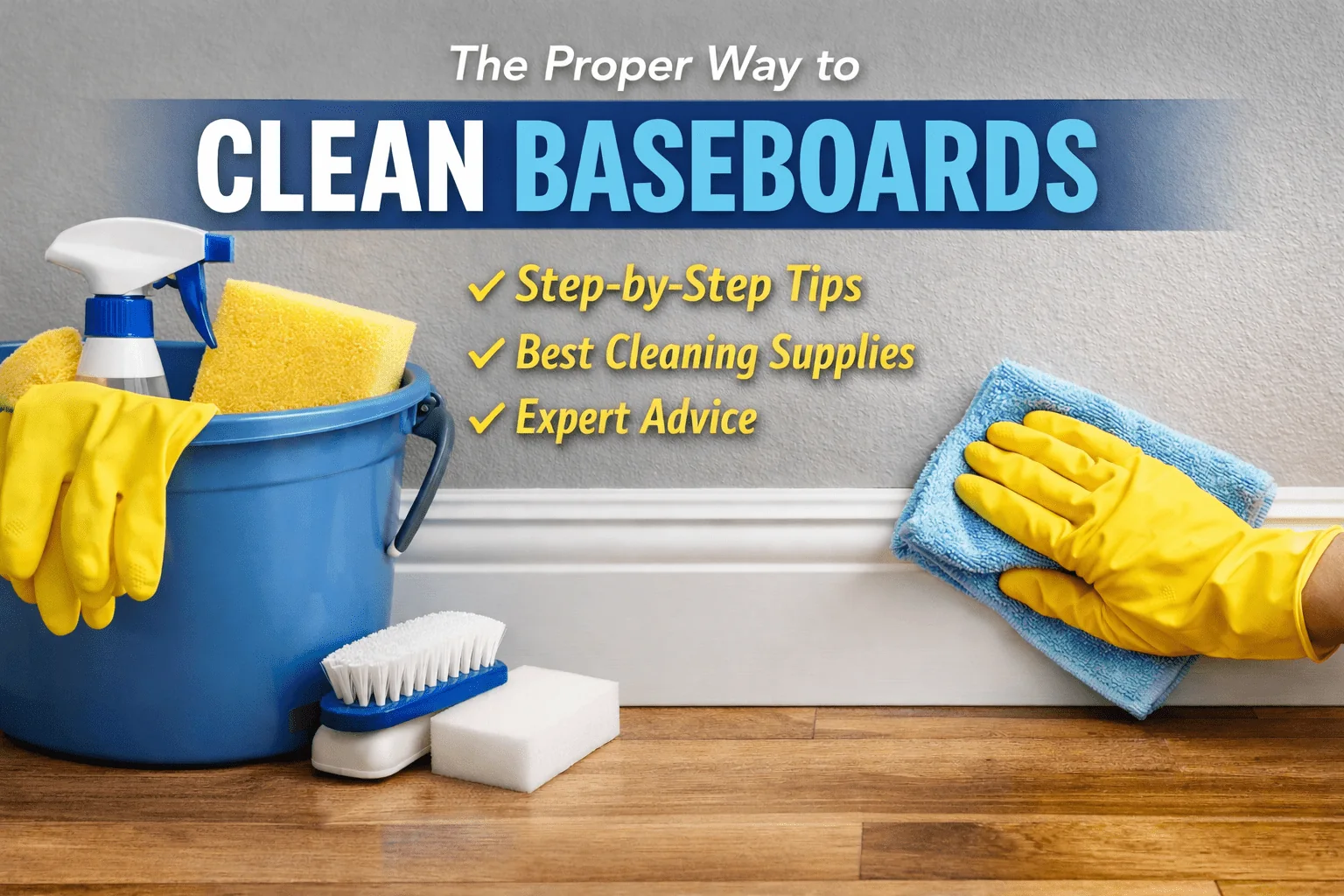
Step-by-Step: The Proper Way to Clean Baseboards
Here’s a method that professional cleaners at Just The Best Clean use to achieve consistent results.
Step 1 — Remove Loose Dust First
Before using any liquid cleaner, remove loose dust:
-
Use the vacuum brush attachment and run it along the baseboards.
-
Or take a dry microfiber cloth and wipe in a steady, horizontal motion.
This step prevents dust from turning into muddy streaks when it gets wet.
Step 2 — Apply Your Cleaning Solution
There are two ways you can approach this:
Option A: Spray Method
If your cleaner is in a spray bottle:
-
Lightly mist the baseboard surface
-
Work in segments (about 3–4 feet at a time)
Option B: Bucket Method
If you’re using a bucket:
-
Dip your microfiber cloth into the solution
-
Wring it out well — you don’t want excess water dripping down walls
Tip: Less liquid = faster drying and fewer marks on the paint.
Step 3 — Wipe and Scrub
Using your damp cloth:
-
Wipe from one end to the other in long, even strokes
-
For grooves, edges, or textured patterns, use the soft scrub brush or toothbrush to loosen buildup
If you encounter tough scuffs, a magic eraser can be used gently — but test a small area first to make sure it doesn’t affect the paint.
Step 4 — Dry and Buff
After wiping:
-
Take a dry microfiber cloth
-
Buff the baseboards to remove any moisture or streaks
This helps restore the crisp, clean look and prevents water spots.
Cleaning Tips by Surface Type
Not all baseboards are created equal — the material determines how they should be cleaned to avoid damage while still achieving a thorough result.
Painted Wood or MDF Baseboards
-
Safe to clean using warm water combined with a mild dish soap or gentle all-purpose cleaner
-
Always use a soft microfiber cloth to protect the painted surface from scratches or dulling
-
Avoid abrasive pads, scrub sponges, or stiff brushes, as these can remove paint or leave visible marks
Stained Wood or Natural Wood Baseboards
-
Use a cleaner specifically designed for wood to preserve the finish and prevent discoloration
-
Apply minimal moisture and avoid soaking the surface, as excess water can cause warping or swelling
-
Wipe dry immediately after cleaning to maintain the natural sheen and prevent water spots
Vinyl Baseboards
-
More durable and able to handle slightly more liquid than wood-based materials
-
Can be cleaned with mild all-purpose cleaners without damaging the surface
-
Continue using microfiber cloths to prevent streaks and ensure an even, polished appearance
Common Mistakes to Avoid
Here are a few habits that make cleaning harder or less effective:
❌ Using Too Much Water
Excess liquid can seep into joints and cause swelling or paint damage. Keep cloths damp, not soaking.
❌ Skipping Dusting Before Wet Cleaning
This turns dust into sludge and makes the job messier.
❌ Forgetting Corners and Edges
Corners trap debris — always check them with a brush or toothbrush.
❌ Waiting Too Long Between Cleanings
The longer dirt sits, the harder it becomes to remove. Regular maintenance saves time and effort.
How Often Should You Clean Baseboards?
The frequency depends on your home:
Situation | Recommended Frequency |
|---|---|
| Homes with pets | Every 1–2 months |
| High-traffic family areas | Every 2–3 months |
| Seasonal deep clean | Every 3–6 months |
| Homes with allergies | Monthly during peak seasons |
A quick monthly dusting with a thorough wet clean every few months is a solid baseline for most homes.
“Pro Level” Tips from Just The Best Clean
Here are a few expert touches that elevate the result:
1. Work Top-to-Bottom
Start in one corner and move around the room methodically. This prevents missed spots.
2. Use Two Cloths
One for wet cleaning, one for drying. This speeds up the process and prevents streaks.
3. Keep a Baseboard Cleaning Kit Handy
Store your tools so that when you’re doing general cleaning, you can knock out baseboards at the same time.
4. Spot Treat Stains Immediately
Scuffs from shoes, crayons, or pet noses are easier to remove when fresh.
5. Consider Protective Sealant
For wood baseboards, a light furniture wax or sealant protects against buildup and makes future cleaning easier.
Why DIY Baseboard Cleaning Sometimes Falls Short
Even with the best instructions, homeowners often run into challenges:
-
Hard-to-reach areas (behind furniture)
-
Built-up grime that’s stubborn
-
Time constraints
-
Risk of uneven results
That’s where professionals help. At Just The Best Clean, we bring the right tools, solutions, and technique — saving you time while achieving a deeper clean.
We treat baseboards with the same care as the rest of your home, including:
-
Detailed dust removal
-
Gentle but effective cleaning solutions
-
Moisture-controlled methods
-
Attention to corners and trim work
When It’s Time to Call the Professionals
If it’s been a long time since your last baseboard cleaning — or you want a truly fresh look — professional cleaning can make a noticeable difference.
Consider scheduling professional service if:
-
You haven’t cleaned baseboards in over 6 months
-
You have pets or a lot of foot traffic
-
You’re preparing your home for sale
-
You’re hosting guests or special events
-
You simply don’t have time for deep cleaning
Final Thoughts
Baseboards may seem small — but they have a big impact on how clean and cared-for a home feels. With the right tools, technique, and consistency, cleaning baseboards becomes a straightforward part of your routine.
Whether you choose to do it yourself or hire professionals, the key takeaways are:
-
Remove dust first
-
Use the right cleaner for your surface
-
Work methodically and don’t rush
-
Dry thoroughly to prevent streaks and water damage
Clean baseboards mean a cleaner home — and that’s what we’re all about at Just The Best Clean.
Frequently Asked Questions
Question: Can dirty baseboards affect indoor air quality?
Answer: Yes. Baseboards collect dust, pet dander, pollen, and other allergens that can be disturbed by airflow, walking, or vacuuming. When left uncleaned, this buildup can circulate back into the air, especially in homes with HVAC systems, pets, or allergy-sensitive occupants.
Question: Is it safe to use disinfectants on baseboards?
Answer: Disinfectants can be used occasionally, but they should be applied sparingly and only on surfaces that can tolerate them. Frequent use of strong disinfectants may dull paint, damage finishes, or leave residue. For routine cleaning, gentle cleaners are typically sufficient.
Question: Why do baseboards still look dirty shortly after cleaning?
Answer: This is often due to residue left behind from overly soapy solutions or not fully drying the surface. Dirt can cling to leftover moisture or cleaner film. Proper rinsing, minimal product use, and thorough drying help baseboards stay clean longer.